

How To Block Stairs Without A Gate
Your baby is mobile and babyproofing is needed. At present is the time to become information technology washed! After all, when your little one starts crawling, they'll head straight for the stairs!
One of the first things you should practice is cake off stairways, ideally before your babe tries to scoot. At that place are many options to choose from when it comes to babe gates. Stairway extension kits and one-half doors tin can be used to create baby barriers.
Here are some suggestions for blocking stairways without a infant gate.
Methods of Blocking Stairs Without a Baby Gate
Method 1: Safety covers
How it'due south done
Step 1: First, you have to open the prophylactic covers carefully.
Stride 2: Stretch these safety covers to their full length.
Footstep iii: Place the prophylactic covers right in front of the entrance of the stairs and secure them with a boom and attach it to the corner of the embrace.
Step iv: Tighten all the bolts and nuts for rubber purposes.
Pros
- Helps prevent children from stepping on the stairs
- Covers the unabridged entrance of the stairs to avert any astringent incidents with the kids
- The soft texture protects the children from getting whatever bruises or cuts
Cons
- Not very reliable
- May final only for two-iii months
- Lightweight
- The soft texture may be damaged hands
Method 2: Stairway separation kits
How information technology's done
Stride 1: Take all the pieces of the stairway separator kit.
Pace 2: Place each slice of the stairway separator on the side of the stairway.
Step 3: Secure the stairway with basics, bolts, and other tools.
Step four: Ensure that all the nuts and bolts are tightly screwed once yous are washed.
Pros
- Makes domicile safer for children
- Gives a unique and mod look
- Comes in a hard texture
- Can stay good for months
Cons
- Tin be expensive
- Your kids may get injure by the hard texture of the stairway separator
Method iii: Stair barriers
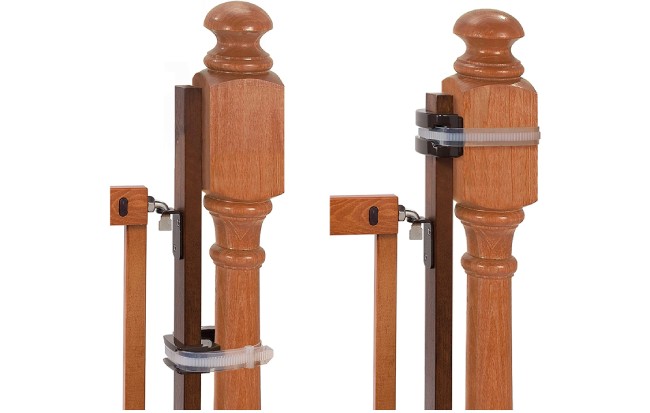
How information technology's done
Step one: Take the stair barrier and mensurate the length of the stair with it.
Footstep two: The length of the stair barrier and the stair must exist the aforementioned.
Step iii: Place the stair barrier horizontally or vertically every bit per the design of the stairway.
Step four: Secure the barrier with nuts and spiral them tight.
Pros
- Prevents kids from accessing the stairs
- All-time manner to avoid dangerous incidents
- Makes home safer for children
- More than stable and reliable than other stair blockers
Cons
- Expensive
- Can be complex for DIY installation
Method 4: Tension rods
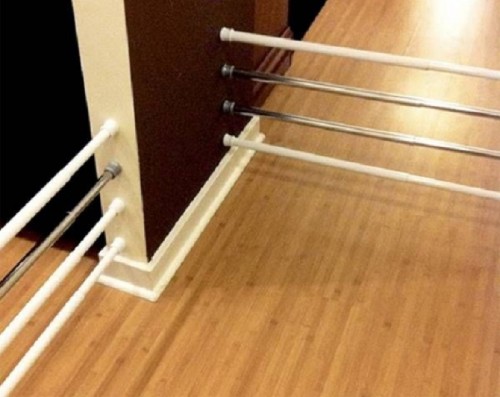
How information technology's washed
Step i: Firstly, you have to dig holes side by side to each other at the entrance of the stairs.
Pace ii: Now carefully secure the rod holder in these holes with nuts and bolts.
Pace iii: Now identify the tension rods in these rod holders.
Pace iv: Ensure that the rods are correctly placed and secured with tightly screwed bolts.
Pros
- Difficult texture and stiff structure
- Prevent kids from falling and back up them in standing up or sitting downward
- Make the house look proper and secured
- Made of excellent and thick materials
Cons
- Installation rods can exist circuitous piece of work
- Not 100% accident-proof
Method 5: Half door
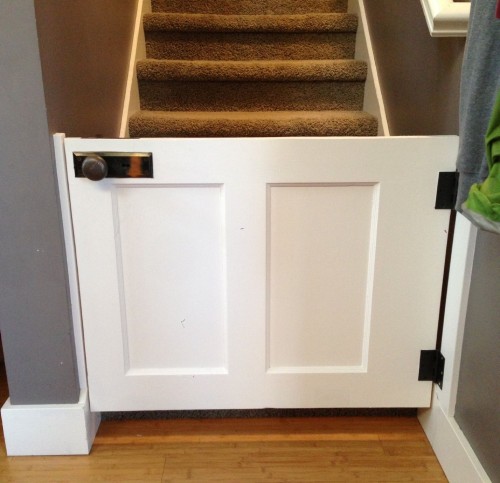
How it's washed
Pace ane: Measure the height of the entrance of the stairs.
Step ii: Check the measurement of the entrance and the half-door by putting information technology in identify.
Pace 3: Make sure that the entrance and the door must be of the same height.
Step 4: Place ane side of the door with nails and screw them tight.
Step v: Lock the door from the bottom and proceed the upper part of the door open up.
Pros
- Prevent children from getting on the stairs
- Help children meet who is coming down or going up the stairs simply block them from entering independently
- A reliable mode to decrease the chances of accidents with kids
Cons
- Expensive
- May increase the chances of accidents for adults
Things to Do When Babyproofing Your Stairs
1. Position the gates correctly
Information technology is of import that the gates at the top just open away from the steps.
two. Carry out a safety check
Your gate is frequently opened and closed. Though it is designed specifically for this purpose, you should regularly inspect its hardware and integrity. A loose screw, a splintered slice of wood, or whatever other problem could impact safety. They should exist addressed immediately.
3. Take the gates out at the correct fourth dimension
After your kid has reached a sure age, remove your baby gates.
A babe gate becomes a hazard when your infant begins climbing. If y'all take vertical bars to go on your child from climbing or securing the mount, y'all should take them downward in one case the kid is two.
four. Slat width should be checked
Do your banisters or railings have vertical slats? When at that place is a danger that your kid's caput will get jammed or that they might even fall through, consider installing a net rail.
5. Rug the stairs
This is a perfect time if you've ever wanted to carpet your stairs. Equally your baby gets older, wood could become dangerously slippery, and the carpet volition provide cushioning.
Things Non to Do When Babyproofing Your Stairs
1. Keep your gate on the ground and don't raise it
Information technology's surprising how kids can fit through pocket-size spaces, and they're very crafty. The need for a taller gate is common, only a common fault is to place information technology a few inches above the basis.
Although you'll gain top, yous'll also increase instability and give your child the chance to fall down. When ownership a baby gate, make sure your child can exist restrained by it.
2. Do not use a gate with a pressure mountain
A pressure level bar is sometimes used to secure gates to walls. They're useful when moving from one room to another but shouldn't be used on stairs. Gates of this type are designed to be moved frequently and fall more oftentimes if they are pushed or pulled
3. Pet gates shouldn't be used
Your basement may have quondam pet gates, which you might consider repurposing. Rubber standards are rigorously tested on baby gates, then they are the safer choice.
4. Procrastination is non an option
You exit too much room for error past waiting too long before installing the infant gate. You should babyproof your home earlier your infant shows any signs of mobility.
FAQs
1. What do I need to do to keep my kids safe on open stairs?
Ans. Barriers tin be fabricated from plexiglass. Stairs can be carpeted, or anti-sideslip mats can be added.
2. Does a baby gate need to swing in or out?
Ans. A safety gate should never open up into a take a chance.
3. Would a baby gate be necessary at the foot of the stairs?
Ans. The tiptop of the stairs is the almost critical spot for prophylactic gates, followed by the bottom.
Source: https://mysafetytools.com/how-to-block-stairs-without-a-baby-gate/
0 Response to "How To Block Stairs Without A Gate"
Post a Comment