

Your Fixed Expenses Are 1328
In running a concern, you'd detect that sure expenses stay the same no matter how assisting you are.
Even more, you seem to exist paying these expenses at regular intervals.
Expenses such equally your office's rent, the salaries of your salaried employees, your internet bill, the interest payments yous make on your loans – these are the ones that you regularly pay every month at the aforementioned amounts (or if not, at relatively the same level).
These are just some examples of your business'due south fixed expenses.
Understanding your business's fixed expenses is primal to knowing what is the minimum acquirement y'all demand to generate in social club to go on your concern running without having to bleed out cash.
You lot usually won't know how much revenue you'll exactly generate until you earn information technology, just y'all know how much your fixed expenses would be even before you lot incur them.
And with that knowledge, you can plan ahead how much you should be earning so that you don't incur a loss.
What's an expense?
As defined by the International Accounting Standards Board (IASB) expenses are "decreases in economic benefits during the accounting period in the form of outflows or depletions of assets or incurrences of liabilities that issue in decreases in equity, other than those relating to distributions to disinterestedness participants. "
This means that anything that decreases your cyberspace worth, with or without cash outflow, is an expense.
What is a fixed expense?

A stock-still expense (likewise referred to as stock-still cost in accounting) is an expense that remains constant any your business'due south level of action is.
Whether there'south an increase or decrease in your sales or production, a stock-still expense will remain the same.
Information technology should be noted though that this is in the context that the increases/decreases are within a relevant or reasonable range.
For example, if production increases by twenty%, or at a level that is within the capacity of your machinery and equipment, then stock-still expenses would stay the same (rent if the assets are rentals, or depreciation expense if the avails are endemic).
Nevertheless, if there is a projected increment in product of 150% of the usual product level, your current machinery and equipment probably won't exist able to handle them all, and as such, you'd either have to rent or buy additional machinery and equipment to arrange the increment.
Both options come with a respective increase in fixed expenses either with hire expense or depreciation expense.
Fixed expenses are the easiest expenses to predict and programme for since y'all typically know how much you'll be paying and when you'll be making such payments.
They are as well the hardest expenses to adapt – if you desire to reduce them, it ofttimes comes with major business organisation decisions (east.chiliad. moving to some other location, selecting another security agency, downsizing).
While fixed expenses typically stay the same for a certain period, that doesn't hateful that they tin can't change.
They do, but it doesn't happen too ofttimes.
For case, rent payments volition remain the same until the stop of your lease contract.
If y'all make up one's mind to renew the charter contract, your landlord might decide to increase the rent to account for aggrandizement.
Another would be interest payments on borrowings.
You'd eventually fully pay your loan and with that comes the end of paying for involvement expenses.
Another feature of stock-still expenses, aside from the constant amount of payment, is that they're usually paid in regular intervals.
Rental payments are paid monthly, salaries are paid bi-weekly or monthly, property taxes are paid annually, depreciation expenses are recorded monthly, etc.
Mutual examples of stock-still expenses
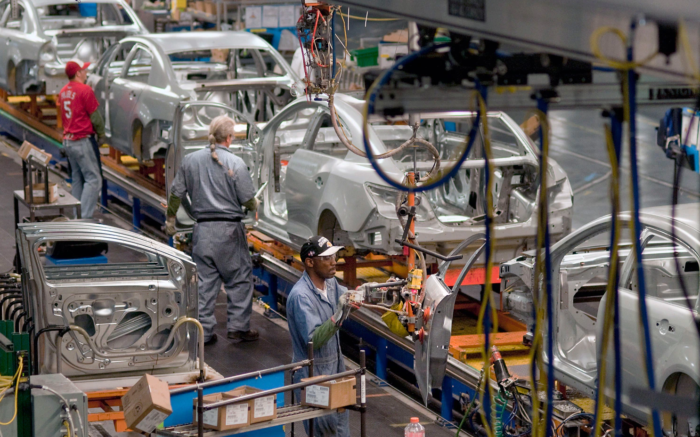
The following are mutual examples of fixed expenses:
Depreciation and Acquittal
Majuscule expenses are not recognized as expenses outright but are capitalized as assets instead.
The recorded nugget is then gradually written off over its useful life.
For tangible assets, the respective expense is referred to as depreciation.
For intangible assets, it is amortization.
There are several methods of calculating depreciation, but the near basic way is by using the direct-line method.
Under the straight-line method, depreciation expense is computed past dividing the volume value of the upper-case letter asset less salvage value over its useful life.
For instance, your business acquired a slice of equipment for $40,000 and is expected to be useful for 5 years with no relieve value.
Using the straight-line method, your concern volition exist recognizing $8,000 depreciation expense per year for five years.
This $viii,000 depreciation will remain constant unless you lot make up one's mind to modify your depreciation method or if the whole asset has to be written off due to circumstances.
Calculating for amortization is the same as computing for depreciation under the straight-line method.
Say your company bought software licenses for $10,000 that will expire in five years.
That would that you'd be recognizing $two,000 amortization expenses every year for five years.
Hire Expense
The payment you make in exchange for utilizing a belongings or infinite that yous don't own is referred to as rent expense.
While hire is usually related to properties that y'all utilize for an part or a warehouse, information technology tin can besides be related to the hire of other assets such as machinery and equipment.
Hire is generally unaffected by your concern'due south level of activity.
For instance, imagine your business organisation is a café and you are renting the space where the actual café is located.
Let's say the rent is $1,500 per month.
No affair how profitable your café is, the rent will remain $1,500/calendar month.
Whether you lot make $7,000 or $15,000 in sales, y'all'd still be paying $i,500 for rent.
Some lease contracts have a mix of fixed and variable components though.
For example, a lease contract may crave you to pay $1,200 per month and in addition, 7% of your monthly sales.
This type of expense is referred to equally a mixed expense (or semi-variable expense) in accounting.
Salaries Expense
This refers to the payments you make to your salaried employees.
It is different from wages that are based on hourly labor.
Salaries are generally fixed and are either paid weekly, bi-weekly, or monthly depending on visitor policy.
Information technology can fluctuate if a lot of your salaried employees regularly render overtime and are getting paid for it, but salaries, in general, are constant and anticipated.
For example, the salary of your institute supervisor will remain the same whether the plant's production goes upwardly or downwardly.
Another would be the salary of your cashier (if southward/he is a salaried employee) will be the same no affair how much sales your shop has fabricated.
Fees for contracted services (accounting, security, maintenance, chaser services, etc.)
Businesses sometimes outsource some of their processes, such as accounting, customer service, security, maintenance, etc. rather than employing people to do them.
Payment for these services is typically governed by a contract, stating the fees and the length of the service.
For instance, yous contracted a security agency to provide security services for your properties.
You are not directly responsible for paying the salaries/wages of the security personnel, only rather the bureau.
What you pay instead is the contracting fee stated in the contract between you and the bureau.
If ane of the security personnel renders overtime (that is outside of your power), you lot would still be paying the same amount to the security agency.
Interest expense
Interest Expenserefers to the interest payments you make related to your borrowings or loans.
Depending on how primary payments are made (monthly, semi-annually, annually, etc,), the interest expense can fluctuate.
However, information technology can also be considered a stock-still expense because the involvement rate and frequency of payments are already determined at the fourth dimension of borrowing.
For example, you borrowed $100,000 from a creditor.
The terms of the borrowing are as follows:
- The loan is payable in 5 years;
- Principal payments of $20,000 are to be made on Dec 1 of each year; and
- Interest payments are to be made on the 5th 24-hour interval of each month at a rate of 1.5% per month.
From the terms above, you'll be paying 1.5% interest per month, which will course part of your stock-still expenses.
For the first year, you'll exist paying $i,500 interest per month.
After the first principal payment, y'all'll be paying $one,200 interest per calendar month, and so on.
Reducing your Fixed Expenses
While it isn't easy to reduce your concern's fixed expenses, information technology can still be done.
It oft comes with major business decisions though, then information technology isn't unremarkably done.
Withal, if you do decide to reduce some of your fixed expenses, even the smallest of adjustments tin can go a long mode.
For instance, if yous decide to move to another location that has cheaper rent, you'd just accept to movement one time, but the effects can be felt for the rest of your business's lifetime.
If nosotros add figures to that, let's say that you're currently paying $3,500 per month for rent, and and so the rent for your new location is $iii,000 per month, so that's equal to $500 per calendar month or $half dozen,000 per year of reduction on your fixed expenses.
Hither are other ways to lower your fixed expenses:
- Instead of moving to some other location with cheaper hire, yous can negotiate for a lower rent with your current landlord
- If there'south an underutilized portion on the space you're renting that you know you won't exist using in the futurity, you can sublease it to another business to salve on hire
- You lot tin can choose to fully repay your loan earlier to save on interest expenses, though this might require approval from your creditor
- You can reduce the number of y'all salaried employees
- You tin can store around for lower insurance premiums
Determining your break-fifty-fifty point
A business concern'south pause-fifty-fifty indicate is the level of revenue that covers a business organization's total costs and expenses.
In other words, it is the minimum acquirement that your concern should generate so that it doesn't incur losses.
Any acquirement that is above a business's break-even bespeak will e'er equate to profits/net income.
Determining a business's intermission-even signal tin can exist approached in two ways: either determining the number of units that have to exist sold, or determining the level of sales (in dollars) that has to exist reached.
The first arroyo is peculiarly useful if you want to assess the profitability of each of your products.
The 2d approach is useful if you lot desire to know the minimum corporeality of revenue yous should be aiming for to not incur losses.
Put into formula form:
Break-even point = Fixed Expenses ÷ (Selling price per unit – Variable Expenses per unit of measurement)
-or-
Interruption-even point = Fixed Expenses ÷ Contribution Margin*
*Contribution margin = (Selling toll per unit – Variable Expenses per unit of measurement) ÷ Selling price per unit
Having an understanding of your business's fixed expenses volition greatly help y'all in determining your business organization's break-fifty-fifty signal.
Since these expenses remain the same no thing the level of action, y'all can treat them as a base of operations for your business'south break-even point.
For example, if the full for your fixed expenses is $200,000, then yous can already tell that your break even-point cannot exist lower than $200,000 even if you haven't adamant what your selling price and variable expenses are yet.

Conclusion and takeaways
Fixed expenses are expenses that typically stay the same no matter the level of activeness a business organisation has.
They are easy to predict and plan for, as aside from the constant amount of payment, they are also paid in regular intervals.
While fixed expenses generally stay the same, it's not like they stay the aforementioned forever.
Rent may be increased past the landlord, your current insurance premium payments may increase, yous'd stop paying interest in one case the related borrowing has already been fully paid.
Annotation that these changes are however like shooting fish in a barrel to plan for every bit they are made known to yous before they happen.
Having an understanding of your business organisation's stock-still expenses will make information technology easier for you to determine your business concern's interruption-even betoken.
You can already tell that your business organization'southward intermission-even point cannot go lower than its stock-still expenses even without knowing its sales and variable expenses.

Your Fixed Expenses Are 1328,
Source: https://fundsnetservices.com/fixed-expense
Posted by: edwardsmandearer.blogspot.com
0 Response to "Your Fixed Expenses Are 1328"
Post a Comment